Artificial Intelligence and Rendering

Javier A. Albusac

Javier A. Albusac

Co-head of the AIR group

Visit website
José J. Castro

José J. Castro

Senior researcher

Visit website
Carlos González

Carlos González

Senior researcher

Visit website
Santiago Sánchez-Sobrino

Santiago Sánchez-Sobrino

Senior researcher

Visit website
Vanesa Herrera

Vanesa Herrera

Senior researcher

Visit website

Research Group

The Artificial Intelligence and Rendering (AIR) group is based at the Escuela Superior de Informática in Ciudad Real, University of Castilla-La Mancha. Since it was set up in 2014 it has applied artificial intelligence techniques to real problems, in research projects and in collaboration with companies. Today it works mainly on artificial intelligence, extended reality and digital health, with the Hospital Nacional de Parapléjicos in Toledo as its clinical partner.
Research Projects

  • Smart-RehabAR: sensorised augmented reality and artificial intelligence platform for upper limb motor rehabilitation

    PID2025-167775OB-C21 · State Research Agency (AEI), co-funded by the European Union · 2026-2030 · Principal investigator, with Javier A. Albusac

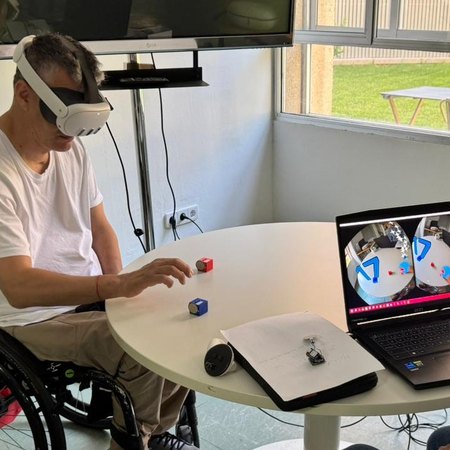
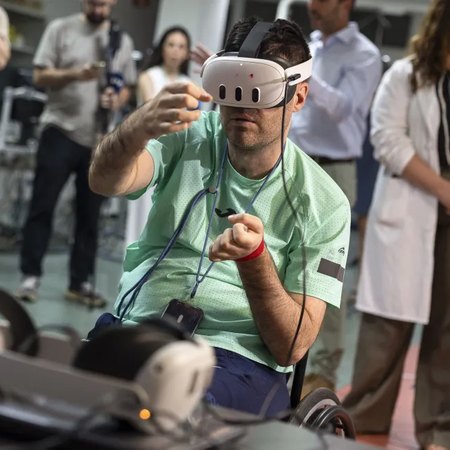
    Coordinated project with the Hospital Nacional de Parapléjicos in Toledo for patients with cervical spinal cord injury. Patients handle real objects fitted with sensors while augmented reality glasses guide them through the task, and functional electrical stimulation helps them reach and grasp. Artificial intelligence modules analyse motor control, detect compensatory movements and adjust difficulty and assistance to the patient's profile, fatigue and progress, explaining each adjustment to the therapist. The UCLM subproject covers the technological architecture, augmented reality, artificial intelligence and the sensorised objects; the hospital subproject covers the clinical protocols and validation.

    Project sheet (PDF, in Spanish)

  • ARX-REHAB: adaptive immersive system for physical rehabilitation with augmented reality and explainable artificial intelligence

    2025-GRIN-38461 · UCLM research group grants, co-funded by the ERDF · 2025-2028 · Principal investigator

    Continues the work of AIRMED. The system estimates the patient's fatigue and compensatory movements during exercise and, with rules that capture the therapists' criteria, suggests how to adjust the routine and explains why. ARX-REHAB brings that reasoning to immersive augmented reality exercises.

    Project sheet (PDF, in Spanish)

  • MRP-5G: mixed reality platform on 5G infrastructure for remote support and diagnosis between nurses, primary care physicians and specialists

    SBPLY/23/180225/000182 · Regional Government of Castilla-La Mancha (JCCM) and ERDF · 2024-2027 · Principal investigator

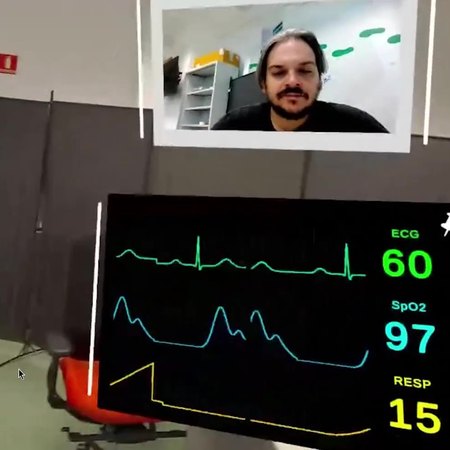
    The primary care professional wears mixed reality glasses. The specialist follows the examination from a web browser, with the same point of view, and guides them by voice. The platform relies on the low latency of 5G networks and is designed for primary care consultations and home visits in rural areas.

    Watch video  ·  Project sheet (PDF, in Spanish)

  • LaborIA: local artificial intelligence agents for an accessible digital workplace for people with motor impairments

    Indra and Fundación Universia Accessible Technologies Chairs · Awarded in 2026, twelve months · Researcher (PI: Santiago Sánchez-Sobrino)

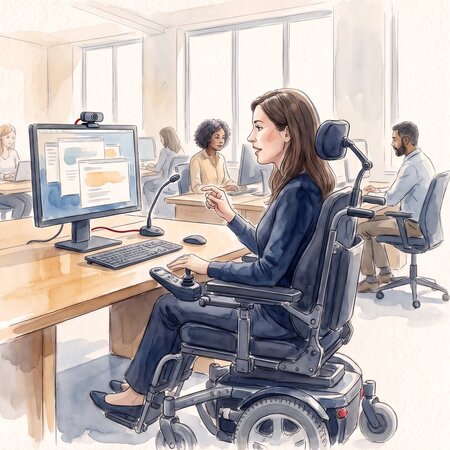
    Many people with spinal cord injury, stroke or other motor impairments cannot use a keyboard and mouse through a working day. Together with the Hospital Nacional de Parapléjicos in Toledo and its foundation (FUNHPAIIN), LaborIA will develop a voice interface adapted to atypical speech and to small gestures, using an ordinary camera and microphone, and artificial intelligence agents that turn what the person asks for into actions on email, documents and the web browser. They ask for confirmation before any sensitive action, and everything runs on the user's own computer, with no third-party cloud. The software will be free and open. It was one of the three proposals selected in the general call.

    Project sheet (PDF, in Spanish)

  • ADAPTA-VR: recovering autonomy after motor disorders through immersive virtual reality learning environments

    Indra and Fundación Universia Accessible Technologies Chairs · 2024-2025 · Researcher (PI: Javier A. Albusac)

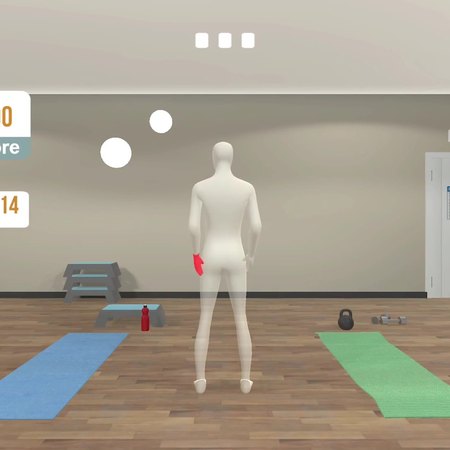
    Free and open virtual reality learning environment for people with a recent injury that limits their mobility, developed with the Hospital Nacional de Parapléjicos in Toledo. It includes an immersive simulator for learning to drive an electric wheelchair, recreations of adapted home and work environments, and movement recording to measure progress objectively. It was selected from 21 proposals submitted by universities across Spain.

    Watch video

  • AIRMED: artificial intelligence-based device to support the physical rehabilitation of people with neurological diseases

    2022-GRIN-34400 · UCLM research group grants, co-funded by the ERDF · 2023-2025 · Principal investigator

    Decision support system for physiotherapists. Using the data from each session, a fuzzy logic model suggests adjustments to the patient's rehabilitation routine and an explainable artificial intelligence module justifies each suggestion, so that the therapist can accept or reject it on informed grounds. It is part of Sergio Martínez Cid's PhD thesis, defended in 2026.

    Project sheet (PDF, in Spanish)

  • VR-ZOCO: design and development of a VR-Shopping and AI platform for the digitalisation and strengthening of local businesses and economies

    TED2021-131082B-I00 · State Research Agency (AEI), NextGenerationEU/PRTR · 2022-2025 · Researcher (PI: Javier A. Albusac and José J. Castro)

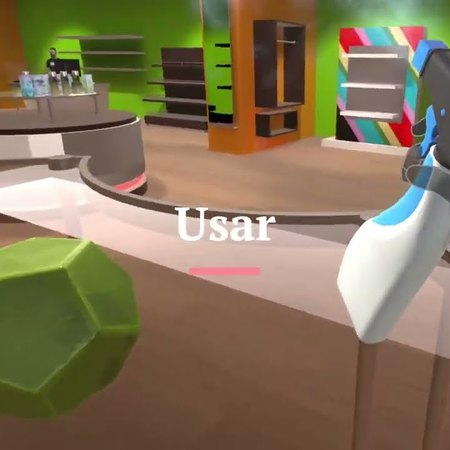
    Virtual reality e-commerce platform that lets small shops display their products in immersive stores, with personalised recommendations based on artificial intelligence. It led to the registered product VRZoco and was evaluated at a real commercial event, with purchases made with the participants' own money, and with spinal cord injury patients at the Hospital Nacional de Parapléjicos to adapt hand interaction.

    Watch video

  • REHAB-IMMERSIVE: development, implementation and cloud deployment of a virtual reality platform for upper limb rehabilitation

    PID2020-117361RB-C21 · State Research Agency (AEI) · 2021-2026 · Researcher (PI: Carlos González Morcillo and Javier A. Albusac)

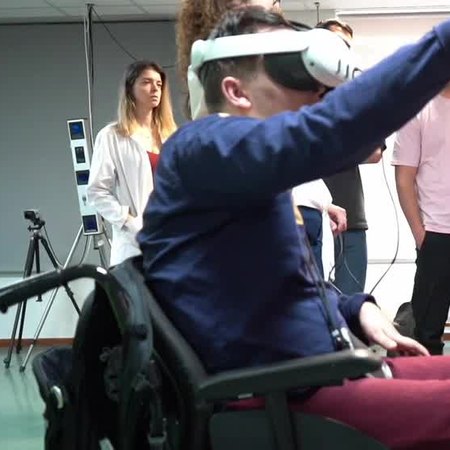
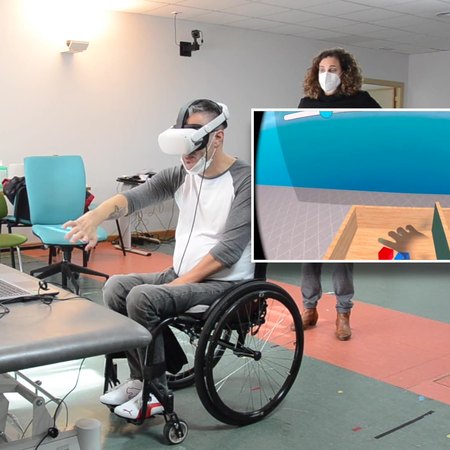
    Platform for building virtual reality upper limb rehabilitation exercises, with natural hand interaction and automatic motion recording, aimed at patients with spinal cord injury. Exercises can be done on a desktop or with immersive headsets, and the project compares movement kinematics in both modalities. Immersive versions of clinical tests such as the Box and Block Test have been built on it, with the Hospital Nacional de Parapléjicos in Toledo.

    Watch video  ·  Project sheet (PDF, in Spanish)

  • EUMOVE: Let’s Move Europe. School-based promotion of healthy lifestyles to prevent obesity

    622242-EPP-1-2020-1-ES-SPO-SCP · Erasmus+ Sport, European Commission · 2021-2023 · Researcher (PI: Mairena Sánchez López)

    Evidence-based resources for primary and secondary schools to promote physical activity before, during and after the school day and reduce sedentary time. It builds on the Creating Active Schools framework (Daly-Smith et al., 2020), which identifies seven opportunities for physical activity at school, and covers all of them [Project website].

  • Development, validation and improvement of a telemedicine tool for the remote supervision of stroke patients

    DTS18/00122 · Instituto de Salud Carlos III and ERDF · 2019-2021 · Principal investigator

    According to the WHO, stroke is the second leading cause of death and the third leading cause of disability worldwide, which makes comprehensive rehabilitation essential for the quality of life of those affected. This project evaluates, validates and improves an existing telemedicine prototype that lets clinical staff remotely supervise rehabilitation exercises performed by patients, with tests at the Hospital General Universitario Nuestra Señora del Prado (Talavera de la Reina) with adults who have had a stroke. Its objectives are an incremental evaluation and validation scheme, the study of techniques such as gamification and serious games to motivate patients and therapists to use the prototype, adapting it to each patient and improving the user interface [Project website].

    Watch video  ·  Project sheet (PDF, in Spanish)

  • iProg: Development of Immersive Systems for Learning Programming

    TIN2015-66731-C2-2-R · Ministry of Economy and Competitiveness and ERDF · 2016-2019 · Researcher (PI: Miguel Á. Redondo)

    The main objectives of iProg were: (1) to define detailed competences for teaching programming at different educational levels; (2) to design learning environments that develop those competences through three aligned elements: active learning methods, software systems and assessment methods; (3) to develop advanced software systems for learning programming, tailored to each educational level with suitable technological and pedagogical approaches; and (4) to evaluate each learning environment against a set of criteria.

  • ARGOS: A Model for Analysing the Normality of Events and Behaviours in Monitored Environments. Application to Video Surveillance

    TIN2009-14538-C02-02 · Ministry of Science and Innovation · 2010-2012 · Researcher (PI: Luis Jiménez)

    The project develops learning models and techniques to express and verify the normality of events and actions in an environment monitored for security. The subproject focuses on security in open spaces (car parks, pedestrian crossings, etc.) using information mainly from surveillance cameras, without ruling out other sensors. Systems built on these models must be proactive and autonomous, able to recognise anomalous situations and raise the corresponding warnings and alarms. Given their distributed and autonomous nature, these models and systems are approached through service-oriented architectures and multi-agent systems.

  • AMODES: Multi-Agent Architecture for Monitoring Normality in Surveilled Environments

    PII1C09-0137-6488 · Regional Government of Castilla-La Mancha (JCCM) · 2009-2012 · Researcher (PI: Luis Jiménez)

    This project studies how to represent the knowledge of a specific domain and how to detect anomalies by analysing the data provided by the sensor layer. Domain knowledge refers to the elements involved in a real environment and the relationships between them. It also covers the analysis and design of surveillance and monitoring systems through an architecture based on service-oriented computing and multi-agent systems, the reference framework for the proposed systems, which eases the scalability, robustness and deployment of all the elements of a security system.

  • ENERGOS: Technologies for the Automated and Intelligent Management of Future Energy Distribution Networks

    CENIT programme (CDTI) · 2010-2011

    The project researches the basic elements of a smart grid able to manage in real time all the multidirectional flows of the new electricity network model, which will bring the massive incorporation of renewable sources at different levels of the network, greater involvement of end customers in managing their energy, higher efficiency and the bidirectional flows created by electric vehicles. The research works at three levels: network infrastructure (new architectural elements), data management platform and, finally, the superstructure for the intelligent management of network data.

  • HESPERIA: Homeland Security. Technologies for Integral Security in Public Spaces and Infrastructures

    CENIT programme (CDTI)

    Hesperia develops technologies for advanced security, video surveillance and operations control systems for infrastructures and public spaces. The project responds to sustained medium- and long-term demand, particularly in the European Union and the United States. Integrated management of security and operations control will make it possible to deploy cost-effective systems that do not yet exist on the market.

  • e-Pactos: Electronic Commerce Tools. An Open Platform for Electronic Commerce Activities, Applications and Agents

    PAC-06-0141 · Regional Government of Castilla-La Mancha (JCCM) · 2006-2008 · Researcher (PI: José J. Castro)

    The goal of this project was to create knowledge and technology that ease electronic commerce in the region and thus increase the competitiveness of companies in Castilla-La Mancha. It researched and developed an architecture for a virtual market that any supplier or buyer can join, designed for free and open access, with mechanisms that ease that connection, and extensible to different platforms, especially mobile devices.